
In this article (0 sections)
- The key differences between solid gold, gold-filled and gold-plated jewellery
- What “gold filled” really means (the 5% rule, layer thickness)
- The skin-discolouration test (a customer-genuine self-test)
- Simple at-home checks: hallmarks, magnet, weight
- How to read common gold purity marks (375, 585, 750)
- When a piece looks gold and is not, examples from real visits
- How we break the news kindly when a piece is plated
- The acid test, why it is the definitive answer
- Why mobile valuation at your kitchen table beats sending pieces away
- What to do once you know what your piece really is
- FAQs about gold plated vs solid and gold-filled jewellery
How to tell if your gold is plated, gold-filled or solid
I’ve spent almost a decade meeting people around Adelaide and country South Australia who bring out pieces of jewellery they’ve held onto for years, often something passed down from a loved one — maybe grandma’s chain or a ring that’s seen many family stories. Most hope it’s solid gold. Sometimes it is, and sometimes it isn’t. And that’s okay. My job, working around the kitchen table valuation, is to help you understand what you really have—gently and clearly—so you can make informed decisions without any surprises. This guide lays out, plain and simple, the differences between gold plated vs solid, gold-filled and solid gold jewellery, and how you can tell them apart with a few careful checks.
The key differences between solid gold, gold-filled and gold-plated jewellery
Gold plated vs solid jewellery vary widely in value, durability, and composition.
To put it simply, solid gold means the item is made entirely from gold alloy without any base metal core. It has a purity measured in karats — like 9ct, 14ct or 18ct — representing how much gold is present. Solid gold is valuable and long-lasting.
Gold-filled jewellery features a base metal core (commonly brass or copper) bonded mechanically with a thick gold layer. This gold layer makes up at least 5% of the piece’s total weight. This thickness gives gold-filled pieces more wear resistance than gold-plated, which only have a thin gold coat on top of another metal.
Gold-plated jewellery is usually the least durable, with its thin gold layer prone to wearing off over time, revealing the base metal underneath and sometimes causing tarnish or skin discolouration.
Understanding these differences helps when valuing, selling, or caring for your items.
What “gold filled” really means (the 5% rule, layer thickness)
If you’ve ever noticed a GF stamp or “gold-filled” label on jewellery, it’s important to know what these mean. Gold-filled items carry a gold layer that must be at least 5% of the total item weight. For example, a 20-gram bracelet would contain at least 1 gram of gold layer.
This layer is mechanically bonded to the base metal underneath and is much thicker than gold plating, which may be just a few microns thick. This thickness improves durability and resistance to tarnish.
Gold-filled jewellery is not solid gold but offers a good balance of affordability and longevity. Pieces with the GF stamp should be treated with more care than typical gold-plated jewellery.
The skin-discolouration test (a customer-genuine self-test)
A straightforward way to get a hint on your jewellery quality is the skin-discolouration test. Some base metals react with moisture or sweat, creating green or black marks on the skin after wearing the jewellery for a while. This tends to occur with gold-plated items, as their thin gold layer wears away exposing reactive metals underneath.
Gold-filled jewellery is less likely to cause skin marks, and solid gold almost never discolours skin due to its non-reactive nature.
This test isn’t conclusive but offers a simple, at-home clue about what you might be dealing with.
Simple at-home checks: hallmarks, magnet, weight
Start by looking for hallmarks — tiny stamped marks often on clasps or inside rings that indicate gold purity. Common ones are 375 (9ct), 585 (14ct), and 750 (18ct). Use a magnifying glass for a better view.
A magnet test is handy too. Gold and gold-filled jewellery are non-magnetic. If a strong magnet sticks to your piece, that’s a sign it contains base metals. But remember, some base metals are also non-magnetic.
Weight can also be telling. Solid gold is dense and heavy for its size; lightweight pieces might be plated or hollow.
These checks are good initial indicators but can’t replace professional valuation.
How to read common gold purity marks (375, 585, 750)
Hallmarks communicate the gold content as parts per thousand: 375 equals 37.5% gold (9ct), 585 means 58.5% gold (14ct), and 750 is 75% gold (18ct). These numbers are often alongside other stamps indicating maker or origin.
Gold-filled pieces may also have karat marks, but if marked GF or gold-filled, the karat number relates to the gold layer, not the entire piece.
Hallmarks can help spot fakes or gold-plated jewellery when they’re missing or of poor quality.
When a piece looks gold and is not, examples from real visits
I recall a gentleman from Adelaide who was hopeful his grandmother’s chain was solid gold. It looked gorgeous, felt heavy, but testing revealed it was gold-plated with wear through the clasp. His disappointment was natural. I explained the sentimental value is still strong, though the market value was less.
A lady also brought a vintage locket thinking it was solid gold. It turned out to be gold-filled, which has decent quality but not the high value she expected. These stories highlight how appearances can mislead and why knowing exactly what you own is important.
How we break the news kindly when a piece is plated
Sharing news that treasured jewellery is only gold-plated and not solid is a sensitive part of my role. I always acknowledge the sentimental importance and gently explain the differences and market realities.
We explore options for repair, repurposing or retaining for beauty, keeping communication kind and honest. This respectful approach helps clients leave feeling informed, not disheartened.
The acid test, why it is the definitive answer
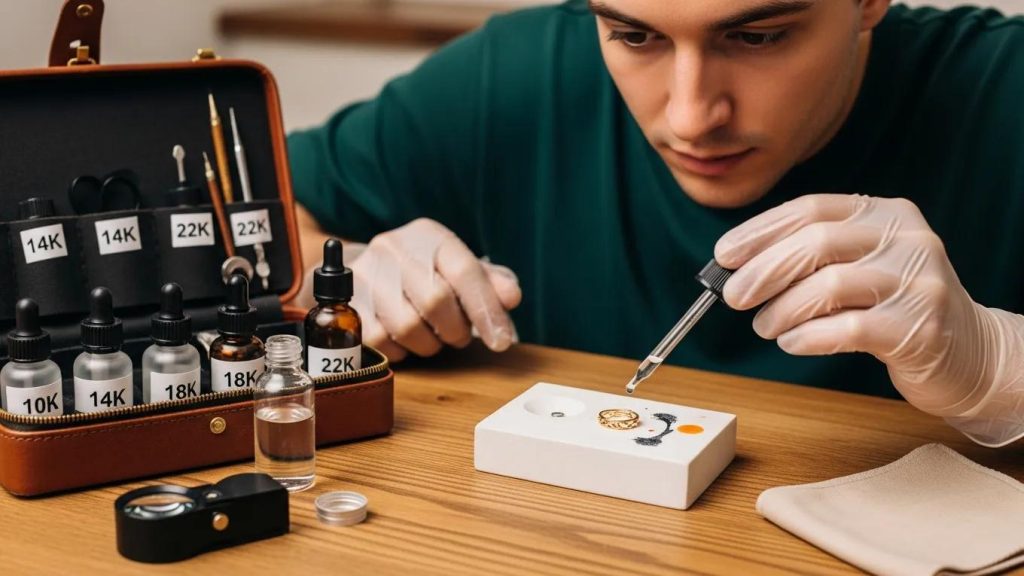
The acid test remains the most reliable method to professionally verify if gold is solid, gold-filled or plated. Specific acids react uniquely to different gold karat levels, giving clear visual confirmation.
The test involves lightly scratching the jewellery on a test stone and applying acid drops to observe reaction. While practical, it should be performed by experienced hands to avoid damage.
For more on this, visit our detailed guide here or check the Perth Mint education centre for authoritative insights.
Why mobile valuation at your kitchen table beats sending pieces away
One major benefit of mobile valuation for your jewellery is the comfort and transparency it offers. Instead of sending cherished items off and waiting nervously, I come to you across metro Adelaide and country South Australia, out to 150 kilometres from Craigmore.
We go through the testing process together at your kitchen table valuation spot, so you see everything happen firsthand. This open approach lets you ask questions and understand your pieces with no pressure, removing the mystery from gold valuation.
What to do once you know what your piece really is
Knowing if your jewellery is solid gold, gold-filled, or gold-plated sets you up to make informed choices. Solid gold has enduring value and can be sold, gifted or treasured.
Gold-filled has moderate value and durability but is less precious than solid gold. Gold-plated pieces, mostly decorative, have lower resale value but can be repurposed or kept.
When selling, seek multiple offers and check current market rates. To care for your pieces, remember proper cleaning and storage will maintain their look and lifespan.
Above all, your jewellery’s stories and memories hold the real worth beyond metal content.
Ready to understand your gold jewellery better?
Contact me today for a friendly, no-obligation mobile valuation right at your kitchen table. Together, we’ll uncover the truth about your treasured pieces with respect and clarity.
FAQs about gold plated vs solid and gold-filled jewellery
Ready when you are.An in-home valuation across Adelaide, 7 days a week, 7am to 5pm. You decide on the day.
Book a home valuation