
In this article (0 sections)
heritage heirloom jewellery , what these collections usually contain
- Introduction
- Adelaide heritage communities: heritage and tradition
- Key features of heritage heirloom jewellery
- Common pieces in family collections
- Hallmarking and fineness stamps explained
- Valuing heritage heirloom gold
- Chris’ anecdotes from Adelaide visits
- Importance of family participation and translators
- FAQ about heritage heirloom jewellery
- Conclusion and call to action
Heritage heirloom jewellery and heritage heirloom gold collections represent more than just ornate vintage jewellery. They are a celebration of heritage and family stories that have travelled across generations and continents to enrich long-time Adelaide families across South Australia. We aim here to share insights in a respectful way that honours the deep traditions and meanings inherent in these collections.
Drawing on nearly a decade of experience and numerous client visits, we explore what typical heritage heirloom jewellery Adelaide families hold, how these pieces are identified and valued, and why family involvement during valuation is so important. We encourage you to explore our broader resources on selling jewellery for a clearer understanding of the process.
Adelaide heritage communities: heritage and tradition
South Australia’s heritage communities have brought rich cultural traditions that include masterful jewellery craftsmanship and preserving heirlooms as cherished symbols of family identity. Suburbs like Norwood, Campbelltown, Magill, Glenelg, Brighton, and Marion are notable for families who still treasure and pass down these heirloom pieces.
The legacy of migration and settlement has meant that many families hold onto heirloom pieces imbued with personal history , from wedding bracelets to religious medallions with strong spiritual meanings. Adelaide Mobile Gold Buyers is honoured to support this heritage with sensitive and transparent valuation, always allowing families to keep their treasures if they choose.
Community organisations such as Multicultural Affairs South Australia play a key role in supporting cultural identity and awareness for these families.
Key features of heritage heirloom jewellery
heritage heirloom jewellery and heritage heirloom gold often share craftsmanship principles such as high-purity gold usage, hallmark traditions, and symbolic design but maintain unique nuances reflecting their cultural roots.
- Use of 18ct gold (marked with 750 fineness, and sometimes 950 fineness indicating near-pure gold in certain pieces)
- Distinct hallmarking systems: a 750 stamp with maker and city marks, and eagle marks paired with karat stamps
- Strong emphasis on symbolic motifs such as religious medallions and protective amulet charms
- Heavily crafted cables and chains that show artisan workmanship
- Inclusion of family sets, like matching bracelet sets and wedding bracelets
Common pieces in family collections
Typical post-war heirloom collections of heritage origin held by families in Adelaide often contain the following:
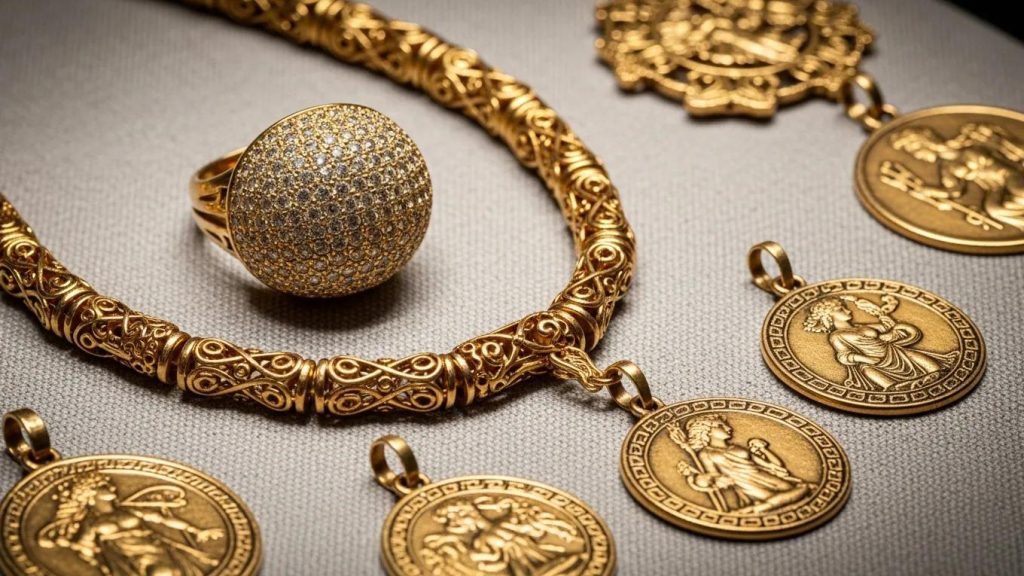
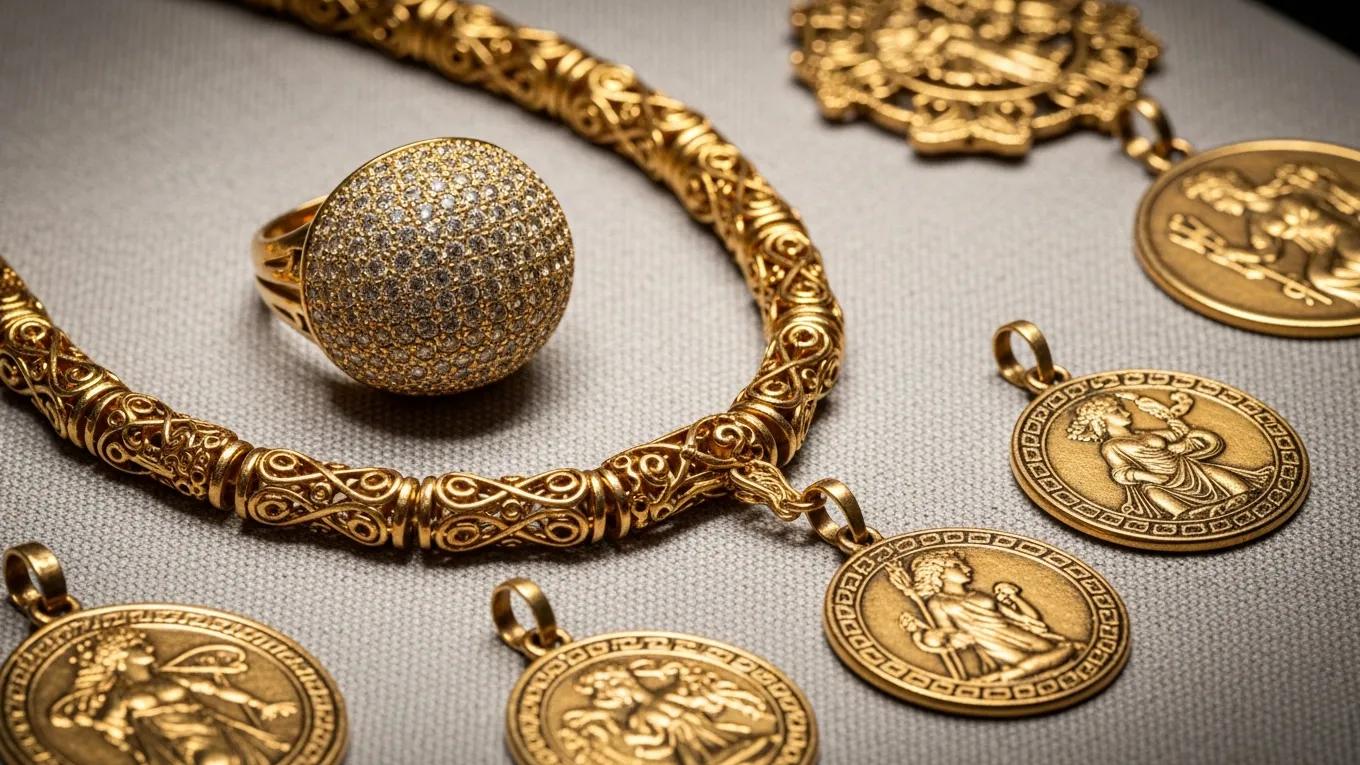
- Heavy cable chains: These solid and visually striking chains are often crafted in 750 or 950 fineness gold. They embody strength and elegance and are a favourite among long-time Adelaide residents.
- religious medallions: Usually featuring saints, crosses, or icons from the Orthodox and Catholic traditions, these are treasured family keepsakes and spiritual symbols.
- protective amulet charms: Particularly common in some collections, these charms are valued for their protective qualities rooted in ancient beliefs, often combined with goldwork.
- Bracelet sets and wedding bracelets: Sets handed down as symbols of union and family longevity, often intricately designed and richly detailed.
- Bombe rings and Byzantine chains: Classic styles with a proud heritage, admired for their complexity and beauty.
Hallmarking and fineness stamps explained
When assessing heirloom jewellery, hallmarking is a crucial indicator of authenticity and quality. Recognising these marks helps families and valuers alike understand the value and origin of pieces.
The 750 fineness mark and hallmark conventions
The ‘750’ stamp represents 18ct gold containing 75% pure gold. heritage jewellery makers also employ maker’s marks and city stamps, which help trace a piece back to its workshop or regional origin , adding both provenance and trust to each item.
The eagle mark and additional karat stamps
Some heritage hallmarks feature an eagle, which certifies purity and origin. This mark is often paired with gold purity stamps like 14ct or 18ct, while pieces made with 950 fineness gold are rarer but highly prized. These hallmarks emphasise the link between craftsmanship and cultural legacy.
More in-depth information about hallmarking can be found in our guide Hallmarks plain English SA.
Valuing heritage heirloom gold
Selling family heritage gold Adelaide means confronting both emotional and financial considerations. Value depends not only on gold purity and weight but also on craftsmanship, provenance, and cultural significance.
Factors we carefully consider include:
- Karats and fineness: Higher gold purity such as 18ct (750 fineness) and, in rarer pieces, occasionally 22ct (950 fineness) increases value.
- Object type: religious medallions, protective amulet charms, and family bracelet sets often carry cultural and sentimental value beyond metal content.
- Condition and originality: Well-maintained pieces without modern alterations are preferred by collectors and family buyers.
- Craftsmanship: Handcrafted and detailed work adds significant worth.
We provide transparent at-table pricing with no pressure, always respecting your choices throughout.
Chris’ anecdotes from Adelaide visits
Chris Molyneaux shares insights from years of visiting families across Adelaide known for their beautiful heritage heirloom collections. He notes, “Many of the most treasured pieces we see are heavy cable chains with 750 marks, passed down through mother and grandmother. These aren’t just jewellery; they’re family stories encoded in gold.”
One memorable visit involved a Norwood family who presented an intricate set of religious medallions and matching wedding bracelets dating back to the 1950s , each piece lovingly preserved in a worn velvet box that spoke of generations of celebration, faith, and resilience. “It’s moments like these that remind us why respectful, kitchen table valuation matters,” Chris reflects.
Another highlight was identifying a rare 950 fineness heritage bracelet, complete with an eagle hallmark , a piece that had travelled from overseas to Adelaide, embodying the journey of the family who prized it.
Importance of family participation and translators
During home visits, we encourage families to participate fully and bring along trusted members who can help communicate. Sharon oversees engagement and safety, ensuring every conversation is respectful and clear.
Chris is joined on most visits by Sharon or Dylan, a second pair of eyes and a calmer doorstep conversation. Sharon usually attends, and Dylan steps in when Sharon cannot make the day.
We recognise that some families prefer to include translators , this openness helps bridge cultural or language differences and ensures the entire process is transparent. This support builds trust and confidence, honouring the traditions behind each piece.
Frequently asked questions about heritage heirloom jewellery
How can I tell if my vintage heritage gold jewellery is authentic?
Look for hallmark stamps such as the “750” for 18ct gold or an eagle mark on some heritage pieces. These indicate gold purity and origin. Combined with craftsmanship and style, hallmarks affirm authenticity.
Are bombe rings common in both heritage collections?
Bombe rings are notably popular in heritage heirloom jewellery and can be found across many family collections. They feature a distinctive domed shape and bold mid-century styling.
Why is 18ct gold significant in these heirloom pieces?
18ct gold, marked as 750 fineness, contains 75% pure gold, balancing durability with precious metal content. This standard suits heirloom jewellery worn daily or during significant ceremonies.
Can I arrange for Adelaide Mobile Gold Buyers to visit my home?
Yes, we offer a kitchen table valuation mobile service within 150km of Craigmore. We aim for a relaxed, transparent setting with no pressure sales.
Should I bring family members or translators to the appraisal?
We recommend having trusted family and translators present to facilitate clear communication and provide cultural support.
What makes religious medallions valuable?
Alongside gold content, religious medallions’ spiritual and historic significance within families greatly enhances their worth.
Conclusion
The exquisite beauty and cultural richness of heritage heirloom jewellery and heritage heirloom gold beloved by long-time Adelaide families represent far more than precious metals. Each piece tells a story of family, faith, and migration that deserves to be honoured with respect and knowledge.
If you are considering selling family heritage gold Adelaide or want to understand the value of your collection better, contact Adelaide Mobile Gold Buyers. Our friendly kitchen table valuation is designed to support you with transparency, safety, and care.
Get in touch today
Reach out via our contact page or call us for a home visit tailored to your needs.
Useful links
- Sell gold and silver jewellery
- How our process works
- Frequently asked questions
- Client testimonials
- Our story
- Reading late mother’s jewellery expectations
- Understanding hallmarks in simple terms
When you are ready, Chris comes to you.An in-home valuation across Adelaide, Mon to Fri 7 to 5. You decide on the day.
Book a home valuation